- October 13, 2026
- By GB Enterprises
Wall Brackets Engineered For Secure Industrial Mounting
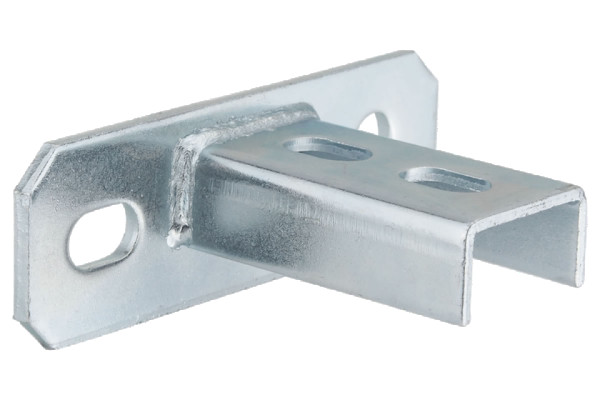
When something needs to stay fixed to a wall — whether it is a machine, a shelf, a panel, or a storage unit — the support behind it has to be right. The Wall Bracket from GB Enterprises is built for exactly that. It gives site teams and buyers a practical, dependable way to mount equipment and structures without second-guessing the holding strength. Before choosing one, though, consider the load it will carry, the surface it will fix to, the space it needs to fit, and what the installation demands. Get those right, and the bracket does its job without trouble.
What Makes A Wall Bracket Suitable For Industrial Use
A standard shelf bracket isn't the same as one built for industrial work. The gap shows up fast when loads are heavy or conditions are rough.
The material has to carry the weight without bending or creeping over time. Thickness plays into this — a thinner bracket may look fine but flex under a sustained load. The shape of the bracket controls how stress moves through it, which is why geometry matters more than it might seem. Mounting holes need to be placed in a way that spreads the load across the wall rather than pulling on one or two points. Projection — meaning how far the bracket sticks out — affects balance. And the surface finish is what stands between the metal and whatever the environment throws at it: moisture, dust, heat. Industrial sites ask a lot from a small part, and the bracket has to be made for it.
Wall Mounting Brackets For MEP And Structural Applications
No two sites are identical, and the role a bracket plays changes depending on the job. On one project it might hold heavy equipment. On another, it supports shelving, a control panel, a piece of machinery, or a section of pipe framework. A well-made Wall Mounting Bracket handles this range without needing a separate solution for every case.
Where these brackets really earn their place is in MEP work. When paired with strut-channel systems, wall-mounted brackets become the anchor for full support frameworks — carrying pipes, HVAC lines, cable trays, and electrical services along walls in an organised way. This keeps the floor clear, the services accessible, and the layout clean. It is a practical approach that works across both MEP and structural applications on industrial and commercial sites.
Choosing The Right Wall Bracket For Your Installation
Buying the wrong bracket costs more in the long run than taking time to choose correctly now. The first thing to check is how much weight the bracket will actually support — not just the static load but any vibration or movement that adds to it over time. Wall type matters too. Brick, concrete, hollow block, and steel all behave differently under load, so the fixing method has to match the surface.
Size and projection need to fit the physical space. A bracket that is too short or too long creates alignment problems. If the site has moisture, chemicals, or heavy dust, corrosion resistance becomes a real factor, not an afterthought. A Wall Bracket also has to work with whatever it connects to — channels, fasteners, frames — so check compatibility before ordering. The bracket alone is only one part of the arrangement. The whole setup has to be thought through together.
Why GB Enterprises For Wall Support Components
GB Enterprises has been in manufacturing long enough to know what site teams actually need from a support component. The production process uses precision metal forming, which means dimensions are consistent and tolerances are held properly. Each Wall Bracket that comes off the line has been shaped with real application demands in mind, not just to look good in a catalogue.
Customisation is handled in-house. When a project needs a specific size, a different material grade, or a particular finish, GB Enterprises can work to that requirement. The wider product range — covering MEP and structural support components — means buyers can source related parts from the same manufacturer, which simplifies procurement and keeps specifications consistent across the job.
Build Reliable Wall-Mounted Systems With GB Enterprises
If you are planning a project that needs reliable wall-mounted support — whether you are a contractor, an MEP professional, a buyer sourcing for a facility, or part of a project team — GB Enterprises is worth speaking to. The range covers Wall Brackets and Wall Mounting Brackets across different dimensions, configurations, materials, and finishes. Custom requirements are taken seriously. Share your load data, site conditions, and what the bracket needs to connect with, and the team will work with you to put together a support arrangement that holds up on site.
FAQs
What is the difference between a wall bracket and wall mounting bracket?
In most cases, people use these two terms to mean the same thing. What actually matters is the design of the part, how it mounts, what dimensions it comes in, and what it is being used for. Do not get too caught up in the label — look at the specification instead.
Can wall brackets support strut channels?
Yes, they can. A bracket fixed to the wall can hold strut channels as part of a wider support framework. From there, the channels carry pipes, cables, HVAC components, or other building services — keeping everything supported and routed properly along the wall.
How do I choose the correct wall bracket size?
Start with the load and work outward. Factor in the projection you need, the bracket geometry, the condition of the wall, and how the fixing points will be arranged. Then look at the full support setup — the bracket, the fixings, and whatever connects to it — as a single system rather than separate parts.
Are wall mounting brackets suitable for industrial environments?
That depends on how the bracket is made. A bracket built from the right material, with a proper finish and the structural thickness needed for the load, will hold up well in industrial conditions. One that is not specified for the environment may not. Check material, coating, and load rating against the actual site conditions before committing.
What should be checked before installing a wall bracket?
Check that the wall can take the load. Check that the fixing method is appropriate for the type of wall. Check the dimensions and make sure the bracket matches what it supports. Ensure adequate clearances are left around the mounted item. Check if site conditions require a corrosion-resistant finish. And before you start drilling, ensure that everything that the bracket is going to attach to — channels, fasteners, frames — is compatible.