- September 07, 2026
- By GB Enterprises
Corridor Utility Support System: Efficient Utility Management for Data Centres
Walk into the service corridor of any large data centre, and you will see the problem. Cable trays stacked without a plan, pipes cutting across power routes, fibre bundles strapped wherever space allowed. A Corridor Utility Support System exists to stop that from happening. When each service gets a fixed, organised path overhead, maintenance teams spend less time searching and more time working. This blog covers why corridor planning matters, what a good support framework looks like, and how GB Enterprises can help your project get it right.
Why Corridors Have Become Critical Infrastructure Zones
Data centres keep growing. Every new rack adds more power demand, more cooling load and more cabling. All of it needs a clear route. Service corridors provide that. They run alongside or between data halls, giving utilities a path that stays clear of the white space where live IT equipment sits.
Without structure, corridor space fills up quickly. Services crowd the same overhead zone. Maintenance becomes guesswork, and future changes mean hours of untangling. Data-centre professionals flag this often. A well-used corridor keeps maintenance work separate from IT operations, making both safer and easier to manage.
Corridor Utility Support System for Data Centre Infrastructure
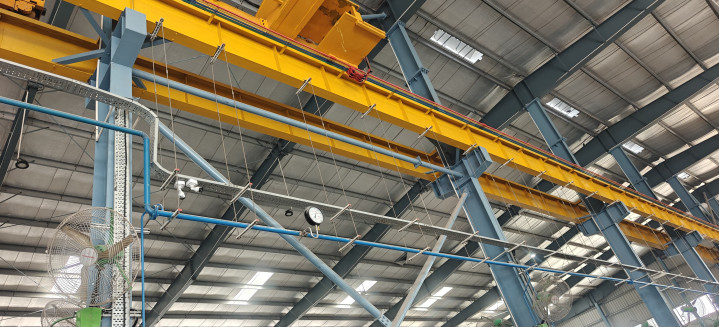
A Corridor Utility Support System is a modular overhead framework. It gives each utility its own organised path. Power feeds, cable trays, fibre runs, piping and HVAC services all get a dedicated level or route. They can sit side by side without getting in each other's way.
GB Enterprises supports this through its MEP and Utilities range. It includes strut channels and accessories for electrical, HVAC, piping and related services. The goal is to use overhead space well, not just add more steel.
One Support Framework for Multiple Utility Routes
A well-built framework can carry a range of services without getting complicated:
- Electrical cable trays and power distribution routes
- Data and fibre pathways
- HVAC-related services and piping
- Mechanical utility lines
- Brackets, channels and accessories, including a Clevis Hanger for suspended loads
- Multi-level arrangements where several services share one corridor
Each service gets its own tier, making fault-finding faster and future changes less disruptive. The goal is a corridor where any team member can trace a route and work on it without disturbing anything else.
Designing Around Load, Access and Existing Building Conditions
Picking a support system on size or price alone creates problems later. The right selection comes from understanding what the framework must carry and where it must sit. Key factors include:
- Total and point loads on the framework
- Number of utility tiers required
- Span between support points
- Ceiling height and available clearance
- Connection points to the building structure
- Access space for regular maintenance
- Existing RCC or precast structural conditions
- Potential seismic loading
GB's strut-channel range comes in different heights, widths and thicknesses for this reason. The section profile must fit the load and layout — no single size works for every setup.
A Modular Approach Makes Future Changes Easier
Data-centre infrastructure changes constantly. Cable volumes grow, equipment gets swapped out, and power and cooling needs shift over time. A modular channel-and-accessory framework handles this without forcing a full redesign each time.
Teams in live data centres often raise the same concern: cable-support space fills up faster than expected. A Corridor Utility Support System built with modularity in mind keeps spare capacity available, so adding a new service does not mean dismantling existing work. The actual scope of reconfiguration depends on the specific product and installation design.
Built for Different Structural Environments
Not every data-centre corridor hangs from the same ceiling. RCC and precast structures behave differently when it comes to anchoring, and the fixing method must match the actual substrate. An anchor suited to RCC may not be right for a precast panel.
Seismic loading should be factored in from the start. A Corridor Utility Support System in a seismic zone needs to be designed with that load in mind. A Clevis Hanger and other fittings should be selected to suit real site conditions, not general assumptions.
Engineering Precision Behind a Dependable Support Assembly
A good support system begins with how it’s made. Steel channels are roll-formed for consistent dimensions and repeatable profiles. Reduced rework and fewer surprises on site. Things to check before you choose a section:
- Accurate channel dimensions
- Consistent steel thickness
- Correct slot and hole positioning
- Sound surface protection
- Load-appropriate section choice
- Reliable accessories and connection hardware
GB Enterprises manufactures MEP support products including strut channels and accessories across multiple dimensions and thicknesses. Established in 2003, the company runs a 165,000 sq. ft. plant with 40+ roll-forming machines and a stated monthly capacity of around 3,500 MT.
Plan a More Accessible Utility Route With GB Enterprises
Overhead infrastructure that is easy to install, inspect and modify saves real time across a facility's life. That is what a properly planned Corridor Utility Support System delivers — on day one and every time a team returns to that corridor.
If you are working on a data-centre project, talk to GB Enterprises. Bring your section requirements, loading details, dimensions and accessory needs, and the team will work with you on a setup that suits your build.
Can a corridor support system carry utilities at multiple levels?
Yes. Multi-tier setups suit corridors where power, data, mechanical and other services share tight overhead space. Each tier needs to be sized for its own load so the whole framework holds up.
How should utility supports be fixed when a data-centre corridor has a precast structure?
The anchoring method must suit the real substrate. A precast ceiling differs from RCC, and the fixing design should reflect that. Dedicated corridor systems can handle both, but installation must follow proper specifications.
Can a utility support framework be modified when a data centre expands?
Yes. Modular frameworks allow you to add new cable routes and change services over time. This is useful if your support space is filling up quickly and you need more cable.
Does increased utilities in a corridor have an impact on maintenance access?
Yes, if working clearance is not planned carefully. The corridor is valuable because teams can service infrastructure without entering the IT area. That access space must be preserved as utility load grows.
What should be checked before selecting a support channel for a multi-tier utility system?
Consider dimensions of section, thickness of steel, load per metre, span, connection method, corrosion protection, slot layout and seismic requirements. On GB's documentation channel, dimensions, thickness, loading, and galvanization are among the important parameters.