- October 04, 2026
- By GB Enterprises
Heavy Duty Pipe Clamp: Reliable Support for Industrial Piping Systems
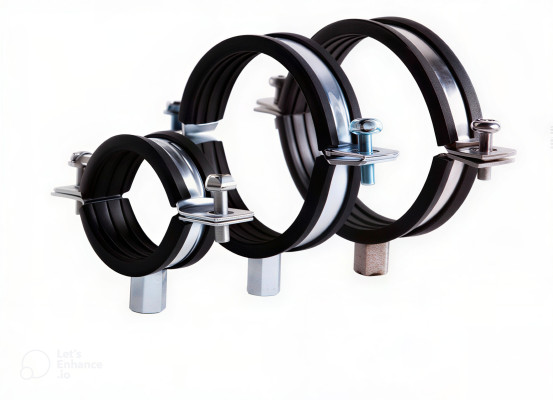
Pipes are heavy and need good support. This is exactly what the GB Roll Heavy Duty Pipe Clamp does. Holds pipes in place, aligns them and distributes weight safely. Proper pipe supports prevent sagging, control movement and reduce vibration. It keeps your whole system running without any trouble. GB Enterprises provides engineered steel support components for the most demanding industrial and MEP applications, giving project teams a reliable product they can count on.
Why Heavy Pipe Systems Need More Than Basic Clamping
Bigger pipes, bigger problems. The bigger and the heavier, the more pressure at each support point. Pressure changes in moving fluids. Heat causes pipes to expand. Vibration along the line from pumps and machinery. Basic fasteners are likely to fail under these conditions. A loose fixing can come loose, allow the pipe to move or be loaded unevenly.
All that is taken care of by a properly built heavy-duty clamp. It grips the pipe tightly, resists movement and evenly distributes the load. Steady support is important on industrial sites where downtime costs money. “Using the correct clamp at the beginning saves a lot of problems later on.
How Pipe Clamps And Strut Channels Work Together
A clamp is not a one-man job. Usually it’s part of a bigger support system. The clamp holds the pipe. The clamp is bolted to a heavy duty strut channel. The channel is attached to the building skeleton. This provides a separate route for the load to be transferred from the pipe to the structure.
This modular setup has obvious benefits. You can slide clamp positions up and down the channel to keep the routing clean. Parts fit together in a standard way, so installation is quicker. The layout is easily changed if it changes or if you need to add new pipes. Site managers and installers alike appreciate that kind of flexibility.
Where Heavy Duty Pipe Clamps Become Essential
Every site has its needs, but the value of good pipe support is evident in many places. Industrial pipes are big and heavy. They are held tight by strong clamps. HVAC lines expand and contract as temperature changes. Strong support keeps them under control. Plumbing and utility runs shall be clamped securely to prevent sag. Fire-protection pipes must always be fixed – this is how safety is ensured. Heavy duty pipe clamps are used in industrial and infrastructure settings to handle vibration and severe conditions that standard fittings cannot. The goal in all cases is simple: keep the pipe steady, safe and in place.
Choosing The Right Support Configuration For Your Installation
A few simple checks are the basis for the right setup. Check the pipe diameter first. The clamp has to fit the pipe correctly. Then, check the total weight—pipe, contents, and insulation- all add up.
Support spacing is also important. The closer the spacing, the better the load-carrying capacity. If there are pumps or machinery nearby, consider vibration. Corrosion-resistant finishes are required for outdoor or harsh environments. Consider the strut-channel setup and how much adjustability you want. Match all of these with the right parts, and you will have a support system that will last for years.
Why Precision Manufacturing Matters In Support Components
Small mistakes lead to big problems. If the clamp is slightly out of true, or the slots in the channel are poorly placed, the entire assembly can become out of line. That is why regular dimensions are so important.
GB Roll parts are made with tight control of size, thickness and profile shape. Slots are placed just right so bolts line up without a fuss. Surface finish provides better resistance to rust and a clean look. Cold roll-forming allows the same high quality to be produced over long production runs. Quality checks are done on each batch to make sure it’s on spec. This means parts that fit right the first time, every time, for buyers.
Building A More Flexible MEP Support Framework
Modern buildings squeeze a lot of services into a small space. HVAC ducts, cable trays, sprinkler lines, and water pipes can all be in the same ceiling zone. A Heavy Duty Pipe Clamp and a Heavy Duty Strut Channel help bring some order to that busy space.
Teams can build a common framework to support multiple services at once, rather than patching each line individually. Adding a clamp, moving a bracket or extending a run is simple. The framework evolves with the building as it evolves or changes. That makes pipe support a smart planning tool, not just a fix.
Why Choose GB Enterprises For Heavy-Duty Support Components
The quality of the product is just as important to B2B buyers as reliable supply. GB Enterprises has good manufacturing experience and proven cold rollforming skills. Its MEP and Utilities range features clamps, strut channels and matching support parts, so you can source everything from one place.
Custom sizes and finishes are available for project-specific needs. Production capacity is sufficiently strong to support large industrial and infrastructure orders. When you partner with GB Enterprises, you get a partner who knows what site teams need and delivers parts that fit and perform.
Build A Reliable Support Framework For Your Piping Systems
Contractors, MEP professionals, industrial buyers and infrastructure project teams – contact GB Enterprises to discuss your pipe support needs. Tell us your clamp type, channel size, finish, dimensions or any other project-specific details. The team will assist you in finding the right solution. Give us a call today and establish a support network that your piping systems can rely on.
FAQs
What makes a pipe clamp suitable for heavy-duty applications?
It's not only about how it looks. The correct clamp should be appropriate to pipe size, load it carries, support spacing, vibration levels and site conditions. The whole set-up, not just one part, has to fit the job.
Can Heavy Duty Pipe Clamps be used with strut channels?
Yes. C-clamps bolt to strut-channel frames for modular, adjustable support systems. This is very effective on MEP & industrial sites where pipe routes can change or where multiple services are carried on one support run.
When should I choose heavy-duty strut channel for pipe support?
Heavy-duty channel is for heavier loads, longer spans, high vibration or when several services are sharing one frame. Lighter choices may be OK for smaller pipes. Always match the channel to the actual load and site condition.
How does proper pipe support help an industrial piping system?
Good support keeps pipes in line, controls movement and distributes loads throughout the structure. This puts less stress on the pipe and on connected fittings and valves. The result is a safer system with a longer life.
What should be considered before selecting a pipe clamp and channel system?
Check pipe diameter, total load, support spacing and vibration. Think environment. Indoor, outdoor, corrosive. Think about the channel size, material thickness, connection type, and the construction of the whole support structure.